
WATER SOLUTIONS — FOR CENTRAL ASIA
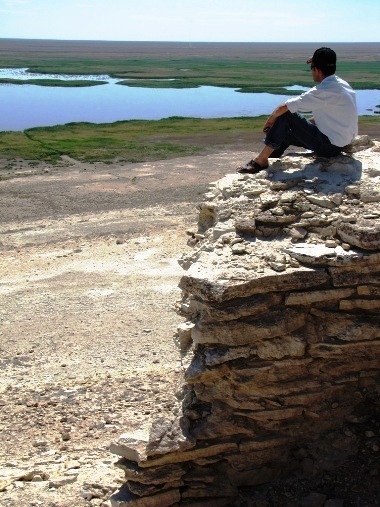 Central Asia – is a region with a hot climate and irrigated agriculture. With climate change, the water here will not increase, but, on the contrary, in the result of glaciers melting it will be less. Meanwhile, the population of Central Asia is growing. Over the past thirty years, the population of the Aral Sea basin has doubled. What should be done that the water could be enough for everybody? The International Water Management Institute (IWMI) believes that solution is to increase the productivity of water and other resources. For this purpose IWMI has been conducting the research works and testing them in practice.
Central Asia – is a region with a hot climate and irrigated agriculture. With climate change, the water here will not increase, but, on the contrary, in the result of glaciers melting it will be less. Meanwhile, the population of Central Asia is growing. Over the past thirty years, the population of the Aral Sea basin has doubled. What should be done that the water could be enough for everybody? The International Water Management Institute (IWMI) believes that solution is to increase the productivity of water and other resources. For this purpose IWMI has been conducting the research works and testing them in practice.
Now we will inform about a number of projects conducted in Uzbekistan and neighboring countries. They have been implemented in cooperation with farmers and dehkans, research institutions, governmental and international organizations. Financial support was provided by Asian Development Bank, the Swiss Agency for Development and Cooperation, country governments.
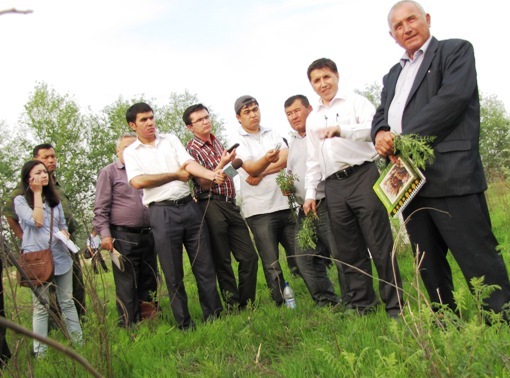
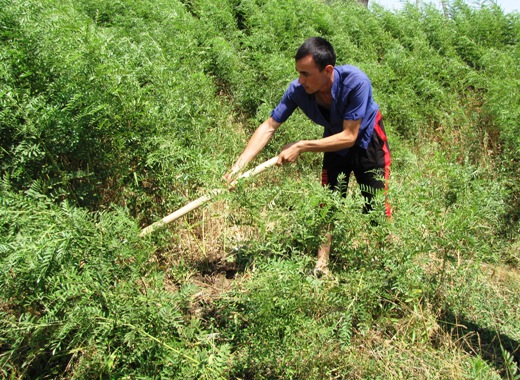 In 2005, Uzbekistan, Kazakhstan and Turkmenistan launched the \»Bright spots\» project. It was aimed to identify the successful farms and to extend their experience. The bright example for this is the farm of Mr.Ergash Primkulov, located in Bayaut district of Syrdarya region in Uzbekistan. On the saline land, on which nothing could be produced and which was thrown, the farmer planted licorice, that should be irrigated only in the first year. Then licorice searches for ground waters itself, drinks them and reduces their level. The lower is the level of ground waters – the less is soil salinity. After four more years, the halophytic plant cleared the field from the salinity without any watering and drainage, enriches the soil with nitrogen, and then farmer planted the wheat on this field.
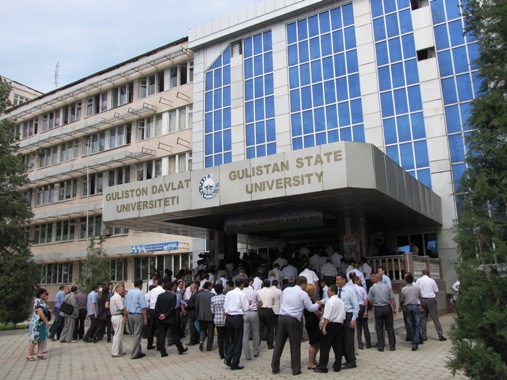 During the “Bright spots” project the eight farmers joined into the alliance. They planted licorice on the 65 ha of saline abandoned land to restore it to life. They learned the growing technology of this halophyte plant on the plots of Gulistan State University. And after five years they shared their experience: \»Fields were planted with roots that have taken a root in the first year, and gave sprouts. In the second year the green mass was used as forage for the cattle. The licorice root continued to grow, cleaning the soils from the salt and enriching its market value. This is a valuable and needed raw material for the medical industry, which is exported overseas\».
In many projects, the emphasis is given on Fergana Valley. It is irrigated from the main inflows of the Syrdarya river (Naryn and Karadarya), small rivers and canals.
In 2003, here started an international project \»Integrated Water Resources Management in the Fergana Valley\». The focal point is the Interstate Commission for Water Coordination (ICWC), the project is funded by the Swiss Agency for Development and Cooperation, and the responsible body for the project execution is an Association of two institutions — IWMI and Scientific Information Center of ICWC. Partners are the Ministries of Agriculture and Water Resources of Uzbekistan, Kyrgyzstan and Tajikistan.
It was decided not to use the administrative approach, and instead, to manage the water resources based on hydrographic — basin approach. Instead of complicated four-level administrative system the new basin management organizations have been created on the pilot sites.
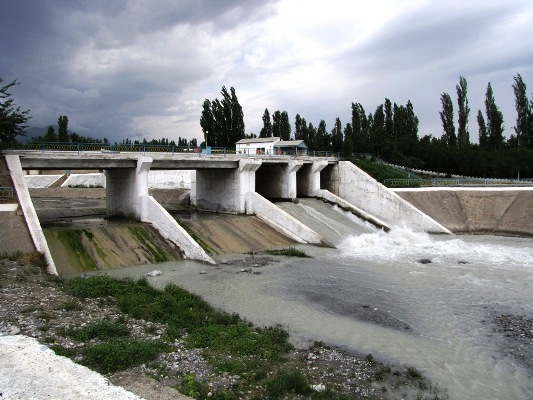
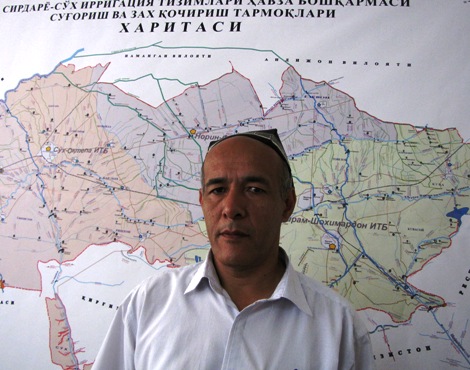 Mr. Fazyljon Rasulov, Head of the Basin Irrigation System Authority (BISA), Fergana province says: «The water is managed along the canals and small rivers. From the state it is controlled by BISA, from the public — Water User Associations (WUAs). We solve the problems in water management in cooperation, integrated. Previously, the water in one canal in the neighboring areas was ruled by “oblvodkhozes”. There were some disputes between them. The water was taken in the beginning of the canal and to the bottom parts it wasn’t provided. Now for one canal there is one ISA, one WUA. This helped to put in order the water use».
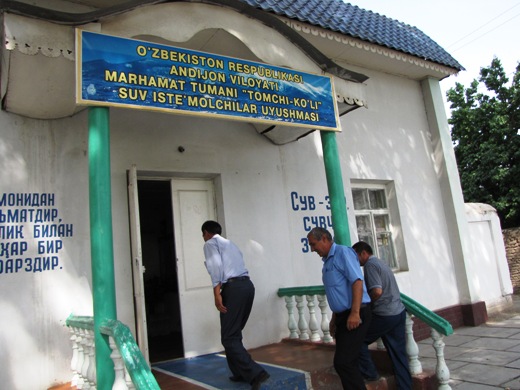
Chairman of the Union of water users, Mrs.Mastura Sayfutdinova says: «When we, the farmers, were proposed to create the water users\’ associations, there were some doubts. The WUA has to unite all the farmers along the canal. Previously, each farmer went for water himself. Now, farmers pay for the services, and the WUA provides the farmer with water. The bottom parts of the canal receive the water stably, there are less argues. If suddenly some disputes occur, they are treated by Water Users Union, which includes representatives from all of WUAs. Their mission – is not only to monitor, but also to prepare the work plan, search for funding, resolve on-going issues».

It is very important to calculate the water and the information on it. In Fergana Valley during the project it was learned to use the resources rationally, to reduce unnecessary losses. The incentive to save was the introduced charge for shipping, and as a result the discharges into the drainage network reduced. Another incentive was the new method of accounting. Before the service fee was determined based on the area of the field, now it has been shifting to the volumetric method. And to make such calculation possible, the hydro units and accounting devices have been installed.
In the frame of the project there have been constructed over thousands of hydro units. They are necessary to show the farmers the benefits of water accounting. Of course, these hydro units are not enough for the valley. They are not cheap – the cost is three hundred dollars. But when there is a accounting device, there is no argues with the suppliers on the volume of delivered water. Now many farmers and dehkans purchase and establish the hydro units at their own expense.
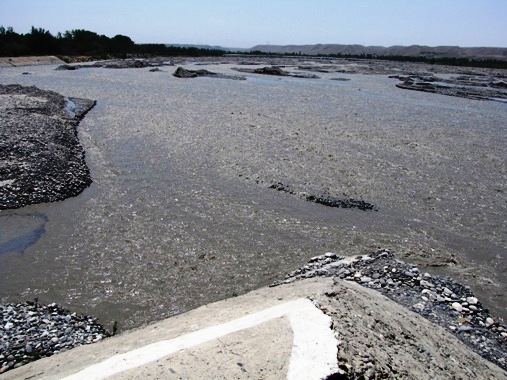
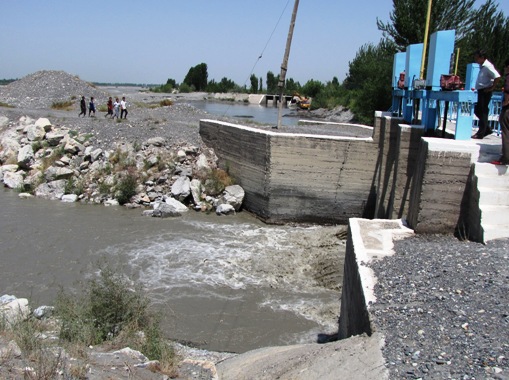 Another implemented project: groundwater management. Basically, it is a loss of irrigated land. How to get them back on the fields?
It was decided to try to collect the ground waters in winter in the natural underground reservoirs, and in summer to pump them for irrigation. The stocks can replenished by the winter runoff.
The works started with filling the empty ditch by the canals, located beside the Grand Fergana Canal, with the winter runoff. By filtration the aquifers were replenished.
The irrigation water was got from the aquifers through the small well and pump, providing two liters of water per second to irrigate vineyards. As shown, this method does not replace the lift irrigation, but can significantly reduce its volume. According to calculations, a small saving in pumping irrigation water significantly reduces the power consumption.
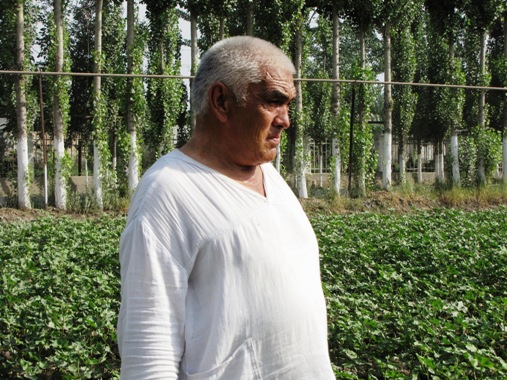
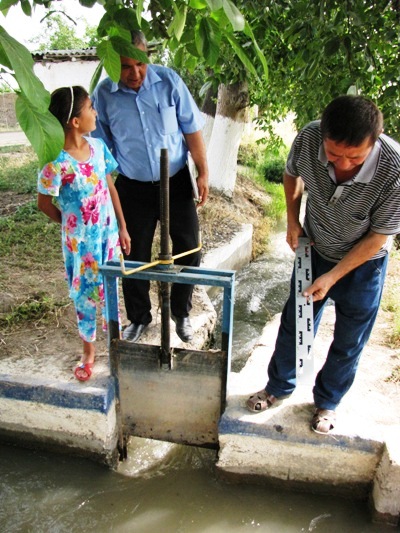
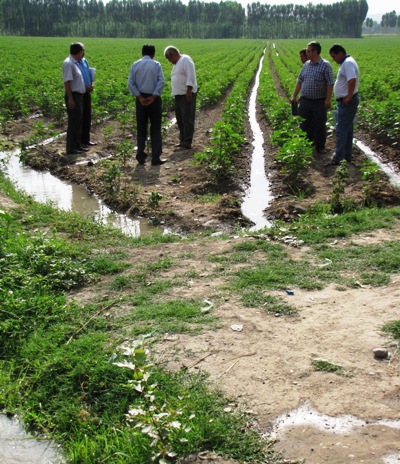
How to increase the water return? The experts and farmers were looking for the answer for this question during the \»Water productivity improving on plot level\» project. The best practices and approaches were tested in the Sogd province in Tajikistan, the Osh province in Kyrgyzstan and in the Fergana, Andijan and Namangan provinces of Uzbekistan. The circumstances of each country were considered.
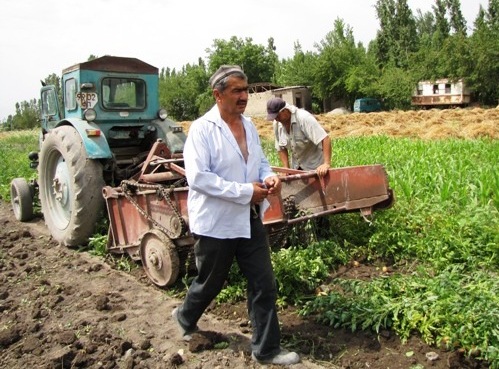
The difficulty for farmers and dehkans is that the majority of them do not have special education. It was necessary to create a structure that would consult and train them. This project is carried out by IWMI together with the Ministries of Agriculture and Water Resources of the three countries. In each district there were created the demonstration plots to show the modern technologies of farming and irrigation. The farmers come here to learn how to plan the land, using the laser devices, how to irrigate, depending the length of the furrows, along the contour of the field, using the film, mulching, how to use drip irrigation and weed control.
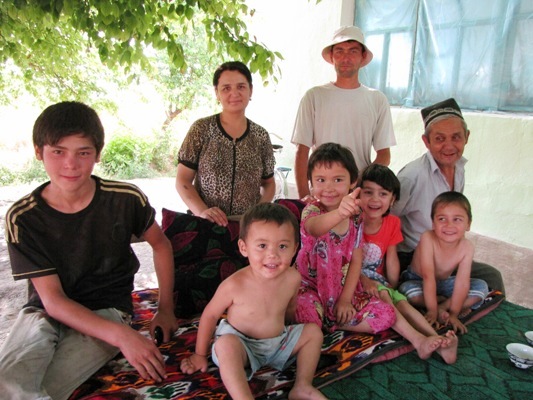 In each region of Fergana valley the training centers were created. They are equipped with equipment and information materials. Farmers, learn!
It\’s better to know than not to know. For this aim the GIS professionals worked hard in the Fergana Valley. Due to space images, they defined the area under irrigation, the crops, the extent of land degradation. The collected data is from the nineties, which allowed to see the changes, and in the future the geographic information system, which will be developed on the basis of the ministries, will give the opportunity to see the development of agriculture and water resources in the dynamics.
 In the future it will be necessary also the new water solutions. Because of this, in Central Asia, new projects are planned by IWMI and other international organizations in cooperation with governments, particularly in the Syrdarya province of Uzbekistan — to improve the saline lands. The studies on possibilities to use of ground waters, drip irrigation in the area of lift irrigation and dissemination of best practices will be continued. Obviously, that for the new water solutions in Central Asia, the main strategic goal will be to increase the productivity of water and other resources. Then they will be enough to everybody.
Nataliya SHULEPINA
Photo by the author
sreda.uz, 4.8.2013
Russian text — water
Следите за новыми материалами, экологическими новостями и публикациями.
Еще статьи из Вода
Для безопасности плотин в Центральной Азии
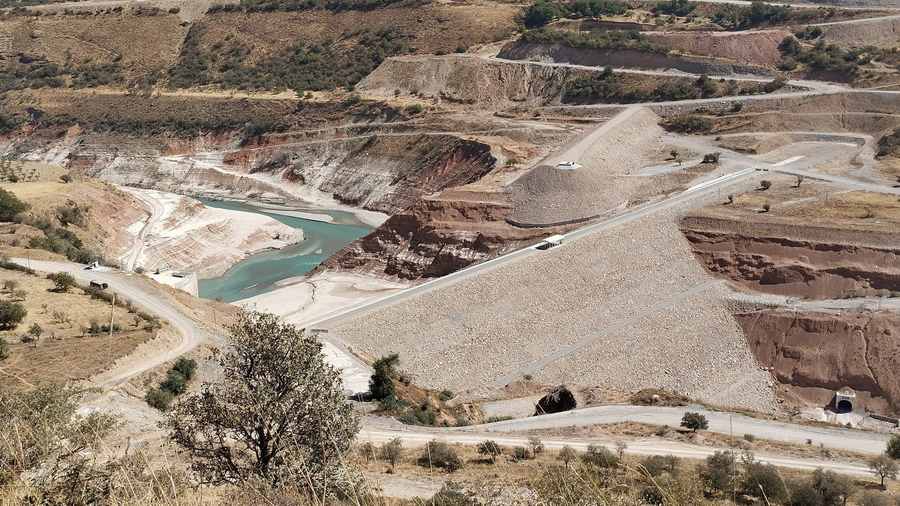
620 просмотровДля обучения специалистов создается Академия безопасности гидротехнических сооружений. В ЦА насчитывается свыше 1200 плотин, из них 110 относится к разряду больших.
Насколько полны были Амударья, Сырдарья и водохранилища на этих реках в июле 2026 года
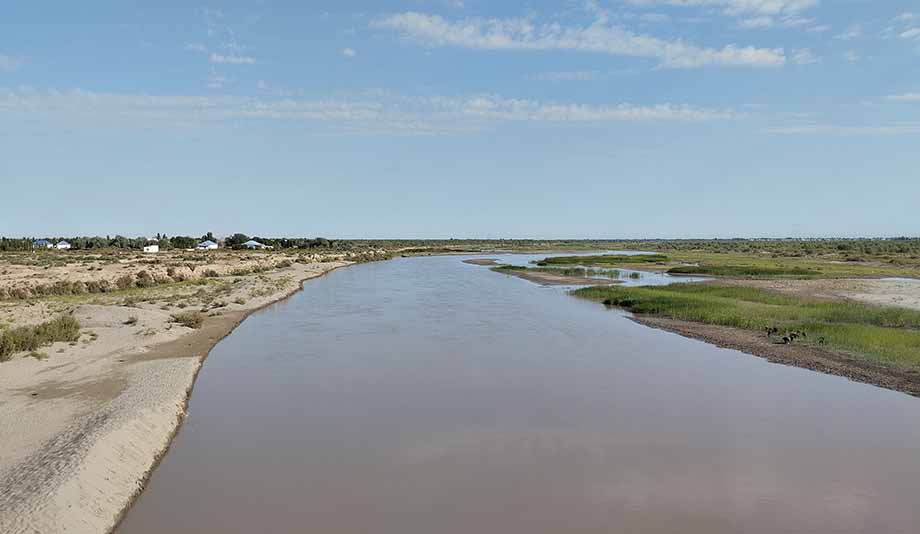
810 просмотровФактическая приточность к верхним водохранилищам была больше прогноза, в том числе к Токтогульскому водохранилищу на 202 млн.м3, к Андижанскому на 10 млн.м3, к Чарвакскому водохранилищу на 192 млн.м3.

Три канала Центральной Азии включены в реестр Всемирного ирригационного наследия в 2026 году
577 просмотровПолучили признание Международной комиссии по ирригации и дренажу ирригационная система «Халифа Хасан» в Таджикистане и каналы «Даргом» и «Шохруд» в Узбекистане.